Table of Contents
Thin and Lightweight Power for Greater Design Freedom
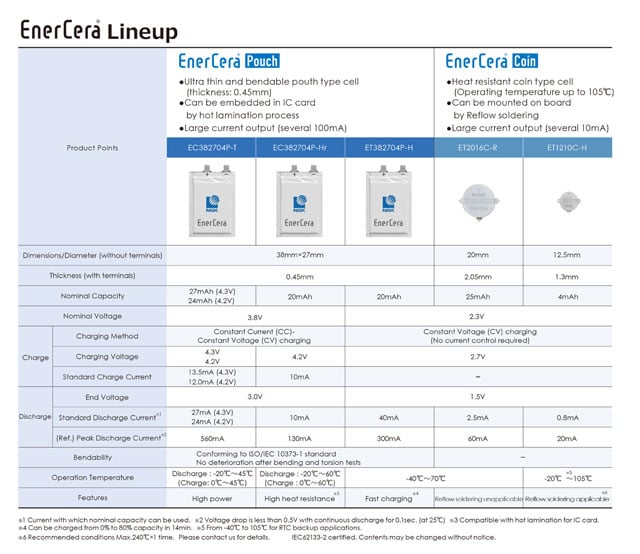
EnerCera is available in an ultra-thin form measuring just 0.45 mm and weighing approximately 1 g.Its compact profile gives developers more flexibility to integrate sensors, wireless modules, circuits, and power sources within limited space.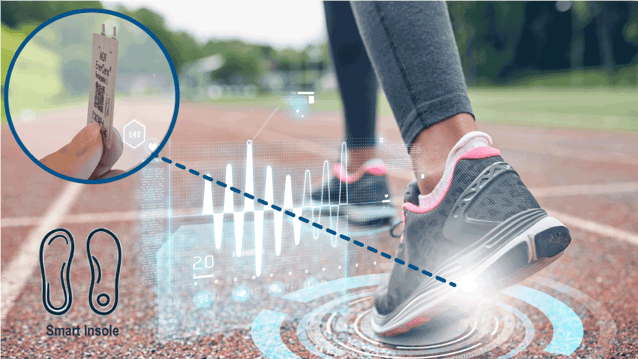
This is particularly valuable for devices worn on the body. In shoulder- or arm-mounted devices, a lightweight battery can help reduce bulk and unwanted movement. In skin-mounted patches, a thinner battery allows the device to sit closer to the body and reduces interference from clothing.
Smart insoles present an especially demanding design challenge because batteries, sensors, wiring, and communication components must fit within a limited space. EnerCera’s thin profile can help developers incorporate electronic functions while limiting the impact on insole thickness and comfort. Another advantage of EnerCera is its bendability. It can bend with the foot during sports activities without getting in the way of natural movement, and its durability has been confirmed through bending tests equivalent to 1,000 km of use. It also offers excellent heat resistance, allowing manufacturers to use high-temperature bonding processes and helping improve overall product reliability.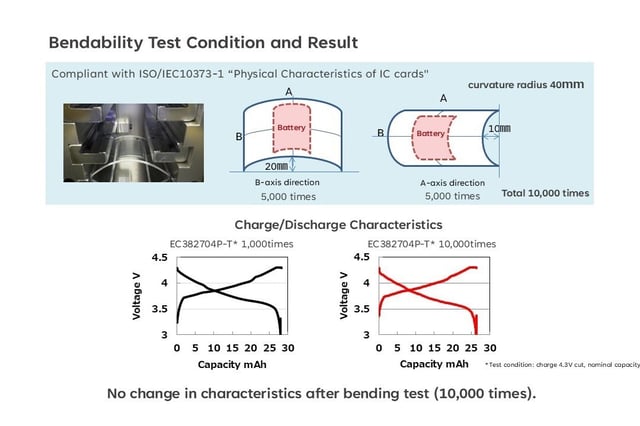
Applied in a Flexible SpO₂ and Heart-Rate Monitoring Device
EnerCera has also been used in academic research on flexible wearable electronics. A research team at Yamagata University selected EnerCera as one of the power sources for a flexible device designed to monitor blood oxygen saturation, or SpO₂, and heart rate.
In this research, the flexible sensor fits closely against the forehead, allowing more accurate measurements than conventional fingertip pulse oximeters. The device uses advanced multilayer screen-printed flexible thin-film substrate technology, and EnerCera was selected as the bendable power source. This helps the device stay thin and flexible while maintaining close contact with the body, without limiting its design freedom or wearability.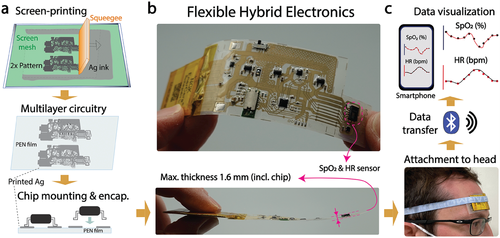
Supporting Devices Worn Close to the Body
Devices worn near the face or head may remain in close contact with the user for extended periods. Thickness, weight distribution, heat, and safety therefore become important design considerations.
EnerCera applies NGK’s ceramic technology to achieve a construction containing almost no organic materials. Even under severe conditions such as nail penetration or complete folding, it does not ignite or generate heat at levels that could endanger the wearer. 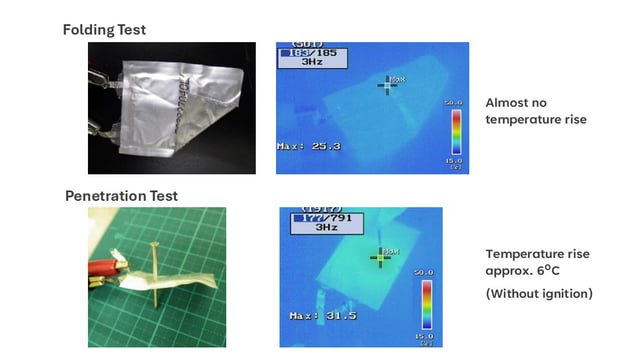
Eye Mask Powered by EnerCera
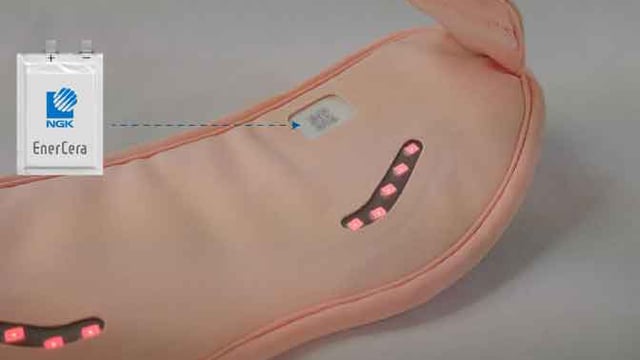
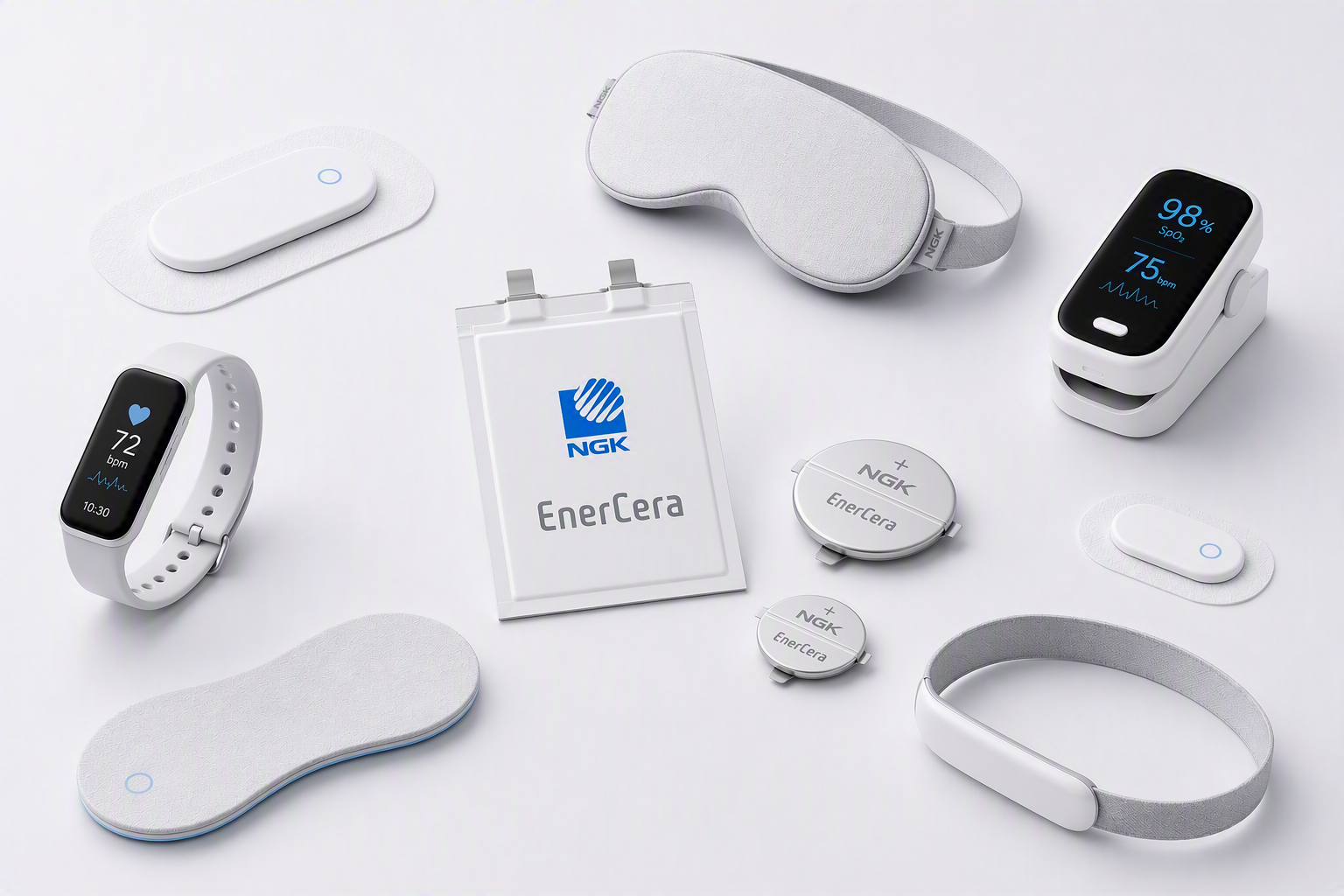
Its thin and lightweight form gives developers greater flexibility to integrate the battery into frames, straps, textiles, or padded sections of devices such as face masks and headbands.
By reducing the need for a bulky battery compartment, developers can position sensors and other components more naturally around the body. Similar design principles may also support future concepts such as mouthpiece-type sensors, subject to appropriate safety and operating requirements.
Over-Discharge Resistance for Long-Term Storage and Intermittent Use
Wearable devices are not always used immediately after production. Some remain in storage or transportation for extended periods, while others are used only intermittently.
Medical monitoring devices may be stored as backup equipment. Sports and heat-stress products may be used seasonally, while rental or reusable devices may remain unused between users.
Conventional rechargeable lithium-ion batteries are generally known to experience a decline in voltage due to self-discharge during extended periods without charging, potentially resulting in rapid capacity degradation. EnerCera’s over-discharge resistance helps support products that must tolerate extended periods of storage, standby, transportation, or seasonal inactivity.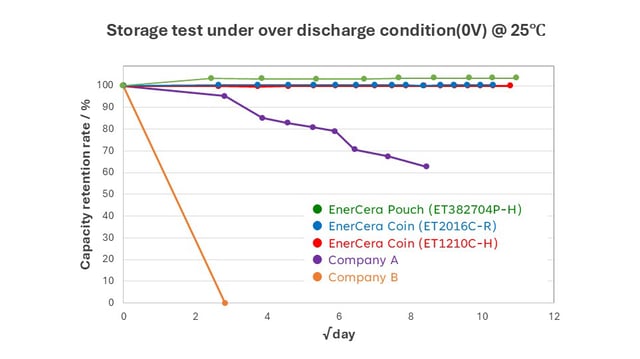
This characteristic can contribute not only to battery reliability, but also to inventory management, maintenance planning, and product lifecycle design.
Expanding Wearable Design Possibilities
EnerCera’s thin and lightweight form can expand the range of possible device shapes and mounting locations. Its material characteristics support devices worn close to the body, while its over-discharge resistance helps accommodate storage and intermittent use.
NGK works with device developers to consider battery selection and integration based on factors including power consumption, device dimensions, mounting location, charging method, storage period, operating environment, and manufacturing process.
EnerCera provides a compact power solution that helps reduce battery-related constraints and opens up new possibilities in wearable healthcare device design.